0.7 to 1 gram of protein per pound of your current bodyweight, every day. Where you land inside that range depends on what you're gaining for and how long you've been lifting — around 0.9 grams per pound covers most people building muscle, and the top end is for athletic goals and experienced lifters.
Calories get the attention in a bulk, but protein is the number doing the quieter, more important job. The surplus decides how much weight you gain. Protein and training decide what that weight is made of. Get the first number right and the second one wrong, and the scale moves exactly as planned while more of the gain than you wanted arrives as fat.
The number, by goal and training age
Most advice hands everyone the same figure. In practice the target moves with two things: the goal, and how trained the muscle already is. BulkMode sets protein in grams per kilogram of current bodyweight, and the ladder it uses looks like this:
- Recovering from underweight: 1.6 g per kg. Early in recovery, total calories matter more than squeezing out the last gram of protein.
- Healthy overall gain: 1.8 g per kg. Enough to keep the new weight lean without organizing every meal around it.
- Building muscle and strength: 2.0 g per kg. The main event, and the number most readers of this page want.
- Athletic performance: 2.2 g per kg. Training volume is higher, so recovery demand is too.
Then training age nudges it upward: add 0.1 g per kg at one to four years of lifting, 0.2 past four. That direction surprises people — veterans gain slower, so why more protein? Because trained muscle is harder to grow. The closer you are to your ceiling, the more the diet has to lean on the raw material to keep progress coming.
Run the whole ladder end to end and it spans 1.6 to 2.4 grams per kilogram — which converts to 0.73 to 1.09 grams per pound. That's the folk "0.7 to 1 gram per pound" rule with the edges filled in: the received wisdom and the math agree here, and it's worth saying so, because they don't always.
Concretely: a 160 lb lifter in the first year, building muscle, gets 145 grams a day — about 0.9 grams per pound. The same lifter four years in gets 160 grams: exactly the famous 1 gram per pound, arrived at from the other direction. And none of this has a sex modifier — the number tracks bodyweight, goal, and training age whoever you are. Bulking for women covers what does and doesn't change.
Per pound of what, exactly
Current bodyweight. Not your goal weight, and not lean body mass. The distinction sounds pedantic and isn't, because each alternative quietly changes the number. Goal-weight protein front-loads grams your current frame can't use yet. Lean-mass protein adds a body-fat estimate to the math for a precision gain smaller than everyday food-label error. Current bodyweight is measurable every morning, and it makes the target self-updating: gain ten pounds and the same rule hands you a bigger number, matched to the body you actually have now.
The range also has a real top. Past roughly a gram per pound, extra protein stops turning into extra muscle — studies keep failing to find added growth above that line for people already eating in a surplus. The extra grams aren't harmful for a healthy person. They're just surplus calories spent on the most filling macro there is, which in a bulk is a bad trade.
What protein actually decides
The calorie surplus controls the rate the scale moves — how many calories to bulk runs those numbers. Protein controls composition. Run the same surplus with protein well short of target and you gain the same total weight, skewed meaningfully toward fat: your body can improvise fuel out of almost anything, but it cannot improvise the material muscle is built from.
Protein also isn't sufficient on its own. Without a training signal there's nothing telling your body to build with it — the surplus and the grams both need somewhere to go. Hit the protein target while skipping the gym and the material simply goes unused.
Hitting the number when you're already full
Here's the part that's specific to bulking. In a diet, protein is beloved precisely because it kills appetite. In a bulk, that same property makes it the obstacle: the macro you need most is the one that fights the surplus hardest. Anyone can eat 145 grams of protein. Eating 145 grams and 3,000-plus calories, daily, is a logistics problem. Four things solve most of it:
- Plan protein first. Decide where the grams come from before you think about calories at all, then fill the rest of the day with whatever's convenient. Protein improvised at 9 p.m. is how the target gets missed.
- Spread it out. Three or four meals carrying 30–50 grams each. Not because timing is magic — it mostly isn't — but because the daily total is only achievable in installments.
- Make some of it liquid. Milk and whey deliver 25–30 grams a scoop with barely a dent in appetite — the practical fix for a day when you're full but behind on grams.
- Favor double-duty foods. Whole eggs, whole milk, salmon, Greek yogurt under granola — calories and protein in the same bite, so neither target raids the other. High-calorie foods has the full inventory with the numbers attached.
Fat and carbs take care of themselves
Once protein is set, the rest of the plan mostly falls into place. BulkMode gives fat about 25% of total calories — 30% when the goal is recovery or health-first gain — and hands carbs everything that's left. Carbs end up as the biggest share, which is correct: they're the training fuel, and in a surplus there is no reason to fear them. The bulking calorie calculator returns all four numbers — calories, protein, carbs, fat — from the same math the app runs on day one.
One honest note: these ranges assume a healthy person. If you have kidney disease or any medical condition that involves protein handling, set your intake with a doctor or dietitian instead of a website. See our health disclaimer.
The target you'd never do the math for
Everything above reduces to one personal number and the daily grind of hitting it. BulkMode handles both ends:
- Your number, not a rule of thumb. The protein target is computed from your goal, your training age, and your current weight — the exact ladder on this page — and it rises as you gain.
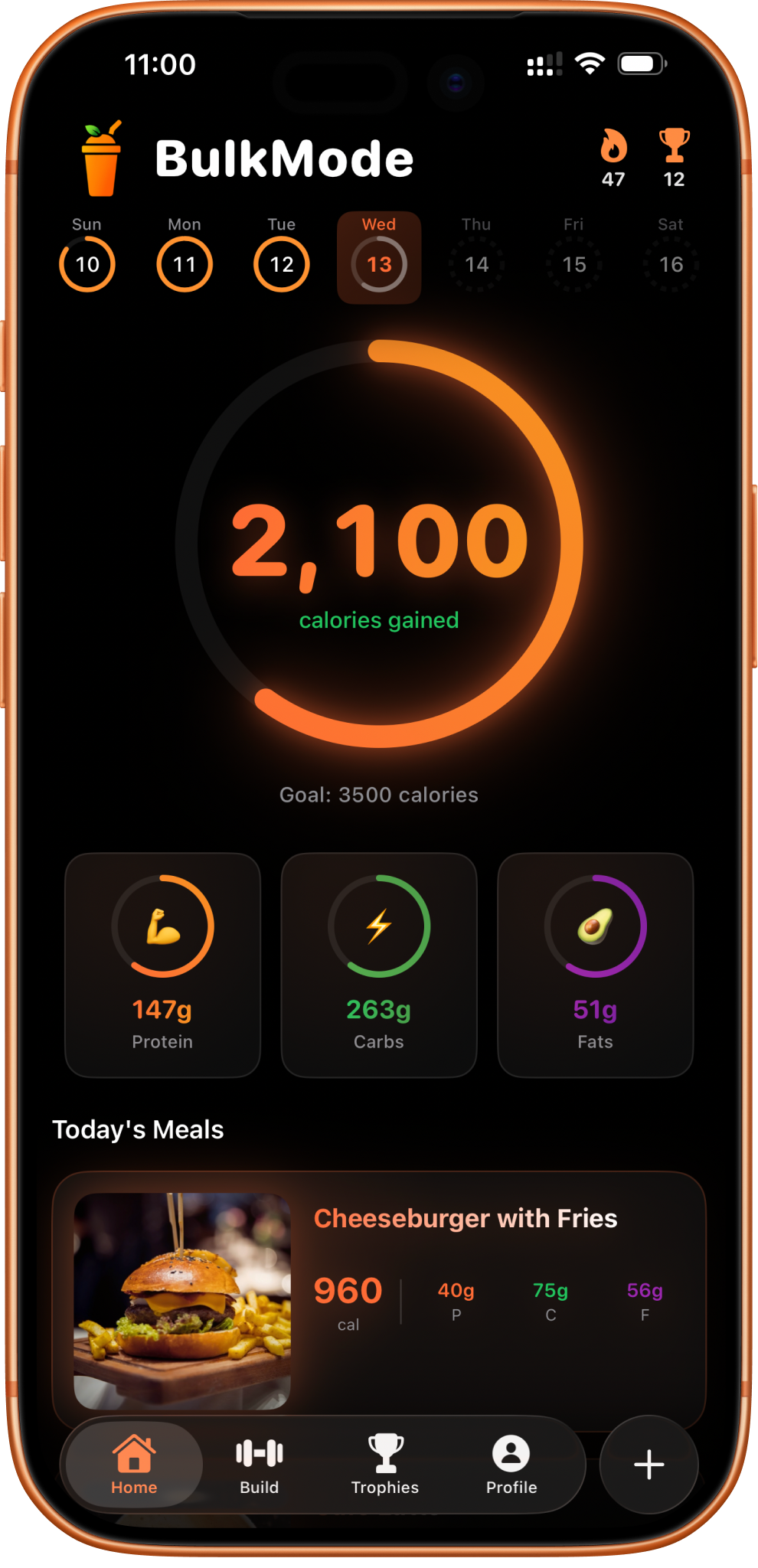
- Every photo counts the grams. Snap the meal and the protein arrives with the calories. The day's running total sits right under the calorie ring, so "am I behind on protein?" is a glance, not an audit.
- Four numbers, no clutter. BulkMode tracks calories, protein, carbs, and fat — nothing else. The macros that decide a bulk get the screen; the twenty that don't, don't.