Both build the same amount of muscle. A dirty bulk just adds fat on top, because your body has a hard ceiling on how fast it can build tissue and no amount of extra food raises it.
Neither term is official. Nobody agrees on the exact boundary, and half the internet arguments about clean versus dirty are really two people using different definitions. Here's the one that matters.
The difference is surplus size
A clean bulk (or lean bulk, same idea) runs a small surplus, usually 200–400 calories over maintenance, mostly from food you'd eat anyway. A dirty bulk runs a big one, often 700 to well over 1,000, from whatever gets the number up.
Food quality is how people describe the difference, but surplus size is what causes it. You can dirty bulk on chicken and rice if you eat enough of it. The scale doesn't know what the calories came in wearing.
Your muscle ceiling ignores your appetite
Here's the fact the whole decision rests on: there's a limit to how much muscle you can build in a month, and it's set by training age, sex, and genetics. Not by food. A beginner might manage around two pounds of muscle in a month, an intermediate about one, an advanced lifter closer to half. Women run at roughly half those rates, and the ceiling drifts down slowly with age.
Eat a surplus sized to that ceiling and most of what you gain is muscle. Eat past it and the extra has one place to go. The bulking calories guide walks through sizing the surplus to your own rate.
The twelve-week math
Two beginners, same body, same program. One eats 250 over maintenance, the other eats 1,000.
- Clean: +250/day is about half a pound a week, so roughly 6 pounds in twelve weeks. His muscle ceiling over three months is about six pounds. Nearly all of it can be muscle.
- Dirty: +1,000/day is about two pounds a week, so roughly 24 pounds. His ceiling is still six. The other 18 pounds is fat.
Identical muscle. One of them is also carrying eighteen extra pounds he didn't want, and taking it back off is months of eating less — longer than the bulk that put it there, and done while trying not to lose the muscle he just built. That's the actual price of the fast version: not the fat, the time.
When a dirty bulk is the right call
It isn't always wrong. A bigger, looser surplus makes sense when the real risk is not gaining at all:
- You're a genuine hardgainer who can't hit the target on whole foods alone, and calorie-dense convenience food is the difference between gaining and stalling.
- You're underweight and adding body mass is the point, in which case the fat isn't a side effect, it's part of the goal.
- You're very lean and new to lifting, so you have both room to fill and the highest ceiling you'll ever have.
The mistake isn't dirty bulking. It's dirty bulking by accident, then wondering why the mirror got worse while the scale got better.
Clean bulking has its own failure mode
The opposite error is just as common and gets far less warning: a surplus so cautious nothing happens. Twelve weeks of careful eating, immaculate food, no weight gained. That isn't a clean bulk. That's maintenance with extra dishes.
If the weekly average isn't climbing, the surplus is theoretical. Clean means small. It doesn't mean invisible. The fix is density rather than volume — high-calorie foods prices out what a real 300-calorie surplus looks like on a plate.
So pick a rate, not a philosophy
The useful version of this decision isn't a label, it's a number: how many pounds per week are you willing to gain? Choose that, size the surplus to it, and let the weekly average tell you whether you chose correctly. For most people the answer lands between a quarter and half a pound a week — fast enough to be worth the effort, slow enough that you're not funding a cut later.
The bulking calorie calculator turns that rate into a daily number, how fast you should gain pins down where in that range you personally sit, and the bulkmaxxing guide covers the training and protein that decide whether the weight lands as muscle in the first place.
One honest note: if you've got a medical condition, or gaining weight has ever been fraught for you, talk to a doctor or dietitian before picking a rate. See our health disclaimer.
We picked a side.
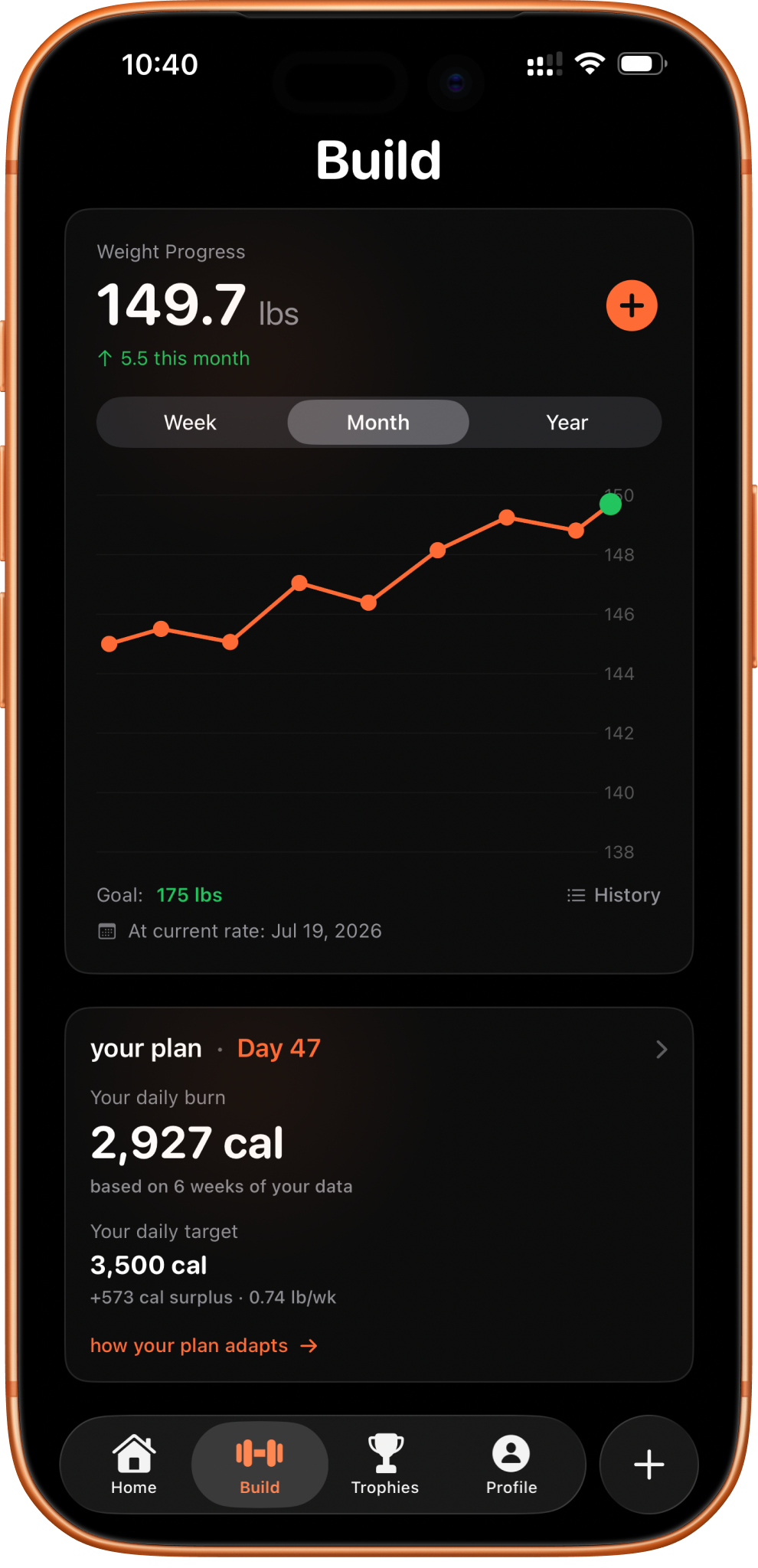
BulkMode is opinionated about this, and the app enforces it. When you set up a goal, it offers you a small set of gain rates built from your lifting experience, age, and sex — and if a faster option would exceed what your body can actually build muscle at, it doesn't appear.
- Rates capped to your ceiling. Ask for more than your profile supports and the plan is built at the honest rate instead. Experienced lifters often see a single option, because every faster one collapses into the same real number.
- A daily target, not a label. Your rate becomes calories and macros. No deciding each morning whether today is clean or dirty.
- The target rises as you do. A heavier body burns more, so the number that was a surplus in month one won't be by month three. Yours keeps up.
- No red warnings for eating. Going over is the goal. Most trackers are built for people eating less. This one isn't.