A bulking meal plan is your calorie target with names attached: a handful of meals that clear your protein number and your surplus, repeated until the scale moves. Below are three complete days — 3,000, 3,500, and 4,000 calories — built from one grocery list. Pick the one nearest your number and start eating it.
A plan only helps if it gets eaten, so everything here is ordinary food: eggs, rice, pasta, milk, ground beef, a blender. No meal is a project, the days deliberately share ingredients, and every line states what it's worth, because the totals are the entire point.
First, find your number
These days only work when they're aimed at the right target: your maintenance plus a 300–500 calorie surplus. How many calories to bulk covers the math, and the bulking calorie calculator runs it from your stats in two minutes. Then take the day closest to your number.
If your target falls between two days, start from the lower one and add: a glass of whole milk is +150, a tablespoon of olive oil in the pan is +120, a spoon of peanut butter in the shake is +95. Adding to a day you can finish beats subtracting from one you can't.
How these days are built
- Protein is seated first. Every meal carries 25 grams or more, so the day clears 0.7–1 gram per pound of body weight before the snacks count — how much protein to build muscle sets your exact number.
- Density carries the calories. Cooking fat, whole milk, nuts, and white rice do the quiet work so no plate turns into a mountain. Every ingredient below is priced out in high-calorie foods — that page is the swap list for this one.
- One drink does heavy lifting. The two bigger days lean on a ~930-calorie shake, because drinking calories doesn't spend appetite the way chewing them does.
- The days repeat on purpose. Same staples, arranged differently. A plan you can cook on autopilot beats a more interesting one you'll quit.
The 3,000-calorie day
For lighter bodies and anyone whose maintenance sits in the mid-2,000s. Five slots, nothing to blend.
- Breakfast — a bagel with two eggs fried in butter and a slice of cheese, plus a glass of whole milk. ~800 cal, 35g protein
- Lunch — pasta with four ounces of 80/20 ground beef and marinara. ~680 cal, 40g
- Afternoon — an ounce of trail mix and a glass of chocolate milk. ~350 cal, 10g
- Dinner — two chicken thighs over a cup of white rice, cooked in a tablespoon of olive oil. ~650 cal, 45g
- Evening — whole-milk Greek yogurt with granola and honey. ~520 cal, 25g
That's 3,000 calories on the nose and about 155 grams of protein — a full gram per pound for anyone up to 155 pounds, which covers most people eating at this level.
The 3,500-calorie day
The middle of the bulking range, and the expanded version of the day sketched in high-calorie foods. This is where the shake earns its slot.
- Breakfast — three eggs fried in butter, two slices of buttered toast, a glass of whole milk. ~750 cal, 30g protein
- Mid-morning — the shake: whole milk, oats, peanut butter, a banana, a scoop of whey, honey. ~930 cal, 55g
- Lunch — rice bowl: two chicken thighs, a cup and a half of rice, an ounce of cheese, half an avocado, olive oil. ~1,000 cal, 55g
- Afternoon — a handful of almonds and two Medjool dates. ~300 cal, 5g
- Dinner — a six-ounce salmon fillet over a cup of white rice. ~550 cal, 45g
That's about 3,530 calories and 190 grams of protein, and the biggest single item is the one you drink.
The 4,000-calorie day
For heavier lifters, very active people, and anyone whose maintenance runs high. If you're eating at this level and the scale still won't move, why you can't gain weight covers where the calories are going. Same food as the other days — the portions and add-ons grow.
- Breakfast — three eggs fried in butter, two slices of toast with peanut butter and honey, a glass of whole milk. ~880 cal, 40g protein
- Mid-morning — the same shake. ~930 cal, 55g
- Lunch — burrito bowl: four ounces of 80/20 ground beef, two cups of rice, an ounce of cheese, half an avocado. ~940 cal, 45g
- Afternoon — a handful of almonds and two Medjool dates. ~300 cal, 5g
- Dinner — two chicken thighs over a cup and a half of pasta, cooked in olive oil. ~790 cal, 55g
- Evening — a glass of chocolate milk. ~210 cal, 8g
That's about 4,050 calories and just over 200 grams of protein, with the eating spread across six slots so no single sitting is heroic.
Make it yours
The plan isn't sacred. The totals are. Swap anything for something of the same kind: salmon for any fish or steak, rice for potatoes, the bagel for three slices of toast. What you can't do is trade a 45-gram-protein dinner for a 15-gram one and call it even — protein swaps for protein, carbs for carbs, and high-calorie foods has the prices for whatever you'd rather eat.
Restaurant meals fit too. Restaurant food is dense by default, so order the dish built around meat, treat the plan's meal as the template, and log what you actually ate. The risk when eating out is the protein, almost never the calories.
Every meal plan has an expiration date
Eat one of these days consistently and it works — until you're heavier, and the body you built burns through the old surplus. The day that gained you weight in month one quietly becomes maintenance by month three. That's not the plan failing; that's the plan working. Why weight gain stalls covers when and how much to add.
It's also why a plan needs a log next to it. A meal plan is a guess about your surplus; the log and the scale are the test. BulkMode logs each meal in seconds and learns your real maintenance from your weigh-ins, so the target climbs as you do. If you'd rather run those adjustments yourself, the best calorie tracker for bulking covers what the tool has to do either way.
One honest note: these are worked examples, not a prescription. If you have a food allergy, a medical condition, or eating past fullness feels distressing rather than just effortful, talk to a doctor or dietitian before adopting any of it. See our health disclaimer.
A plan on paper can't see what you ate.
The gap between a meal plan and a result is the log: the day you actually ate versus the day you meant to. That's the part BulkMode does.
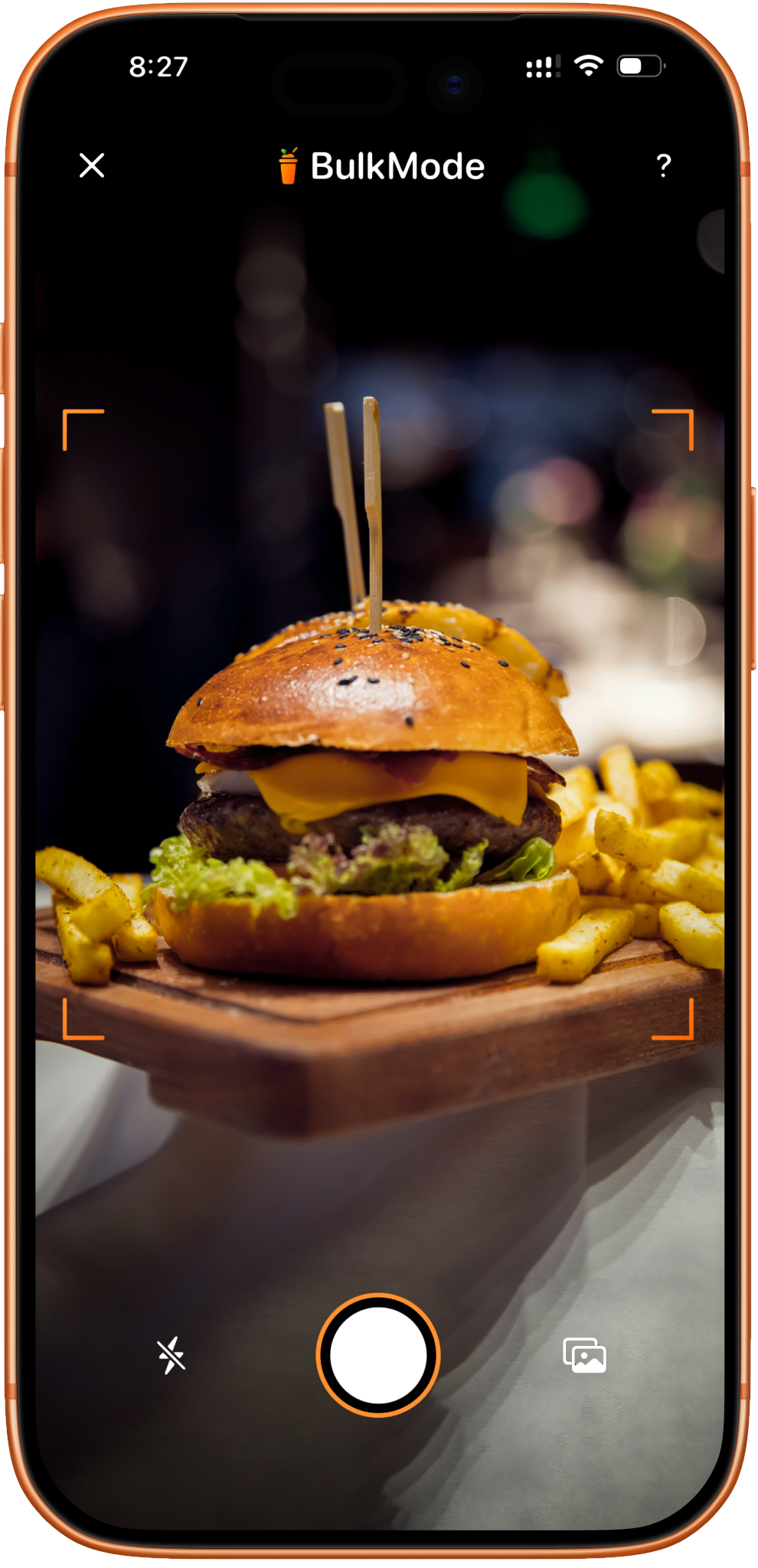
- Snap the plate. Point the camera at any meal on this page and it comes back as calories and protein in seconds.
- Save the repeats. These days repeat by design — log a meal once, save it, and Thursday's breakfast is one tap.
- Fix portions, not entries. Ate two-thirds of the rice bowl? Scale the portion instead of re-logging the meal.
- A target that grows with you. From your logs and weigh-ins, BulkMode learns your real maintenance and raises the number when your body outgrows the plan.